Showing posts with label DotA. Show all posts

Tuesday, July 26, 2011

IntaPodcast

Following our conversation about gaming in class. I feel that I must refute one of the main points that were brought up against gaming before I continue about my post about Podcasts.
If one compares DotA to Basketball, they are strikingly similar when it comes to strategy in the mind, perhaps even more so as DotA has 104 different characters with 115 different items creating much complexity alone, without even considering the complexity of the agency of players using them. One can argue that Basketball engages the players physically and is a form of exercise, I do not dispute that at all, I am just proposing that DotA is a viable example that gaming can create an atmosphere conducive to learning, building key aspects of how one operates in the world.

One of my buddies brought up a point that in terms of communication in games, his experience was that it was rather anti-team-building and that most of the communication was badmouthing. While I do not dispute this, I would point to my example about basketball. There are countless examples of badmouthing in baketball games especially when competition is high, or if one player is not playing well. The same way in DotA. Especially when one enters the realm of professional level of playing (basketball or DotA), there is much clearer communication and affirmation in a team. Yet I would like to direct your attention to an instance in professional basketball now popularly referred to as The Brawl which occurred in Detroit when NBA players Ron Artest, Jermaine O'Neal, and Stephen Jackson were knocking out fans (not even players!) during a game against the Indiana Pacers. One cannot disagree that basketball does not have an aspect of team-building. In the same way, I would say DotA has just as much team-building potential as basketball does.

Moving onwards, class last Friday was my first time making a podcast. We were assigned to create a podcast where we advertised an Edublogger that we follow. Mine was about Larry Ferlazzo, an edublogger in the realm of ELL, ESL, and EFL. I partnered up with another buddy of mine and we mixed it up with a few Korean Pop songs by After School and 2pm for the introduction. This was the first time I was on the creation end of this type of media and it was absolutely fascinating. I was reminded of one of my good friends who was a former MAC'er who was a teacher at Northville High who would make a (shorter) podcast for his lectures for students who missed class or for students to review material. Podcasts were thus his way to supplement his lectures. It sounds really cool. I hope I will be able to utilize this in the classroom in the future! Time to go figure out how to use garage band to make longer clips, and perhaps record a few of my songs.

Thursday, July 21, 2011

IntaDotA?!

Science, as James Paul Gee writes, is like a game. He deals with the "content" question of naysayers by responding to their assertion that "what you learn when you play a video game is just how to play the game" and yet some people think that learning in school is about "learning to play the game," that is, learning facts that can be memorized and resuscitated, yet those people, although they can pass a test, are unable to apply their knowledge to solve problems or think critically. Thus this brings me back to my point Science, is like a game, one must inhabit the identity the game offers, it isn't just "do whatever you want" there are rules to play by and you must see how "they can be best leveraged to accomplish goals."

I began to wonder think about the business world. Then I thought of DotA.

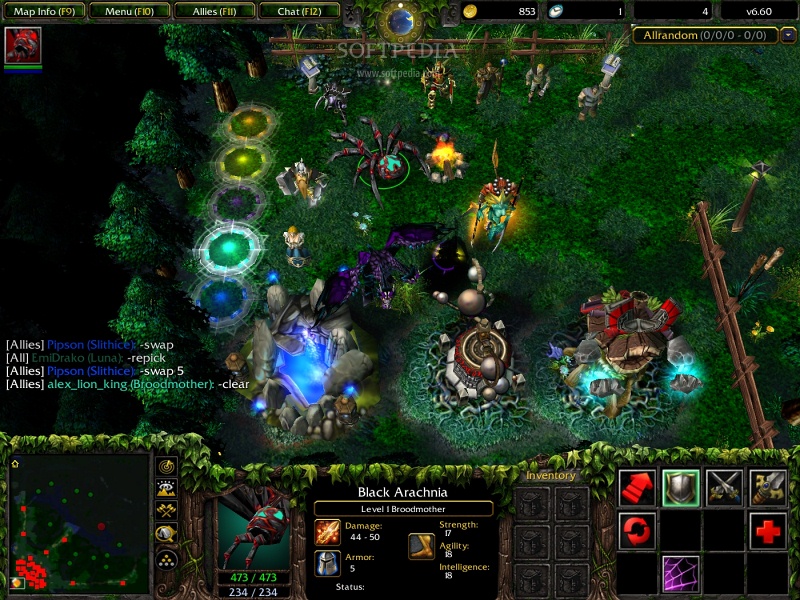
When I read Gee's "Good Video Games and Good Learning" article, I was stoked. I absolutely love games, however I have not had time to really get into all the higher technology and newer interface games like Call of Duty or any Xbox or PS3 console game. DotA stands for Defense of the Ancients. It is the biggest custom scenario for the real-time strategy video game Warcraft III and it's expansion. It is argued that DotA is the most popular free, non-supported game mod in the world.

Anyway, in this game:
  • players on each side choose one of 104 heroes
  • each have different abilities which create advantages and disadvantages over other heroes.
  • The scenario is highly team-oriented; and just like Basketball, it is difficult for one player to carry the game alone.
  • It requires one to kill the spawned units called "creeps" and to "last hit" them in order to get the money, thus there is a specific strategy involving the efficient gaining money (also called farming), which leads to the buying of items.
  • One gains experience and gains levels to upgrade skills/spells, and if one dies, one loses gold and the opportunity for experience.
  • The items bought can be used to create other higher tier items and these are known as "recipe" items.
  • As each hero has different abilities and attributes, different items tailor to different heroes and knowledge of all these things are extremely important.
  • Players will eventually memorize these recipes as they play the game more.
Thus the game then becomes all about efficient farming, teamwork, and knowledge of the game. Then I thought about it longer. The business world is all about knowledge of the field, scoping out the competition, understanding the laws and rules of the trade, efficiency, and teamwork. All things that are developed in a game of DotA.

In addition, each game takes around an average of 40 minutes and no one game is the same, each game has a ridiculous amounts of variation even if each team is constant and each player chooses the same hero. The gameplay changes, and if you throw in the fact that there are 104 heroes to choose from with multiple modes to change it up (such as all random or random draft), this makes for a highly unpredictable game. Yet, one of the things I love about it is, if one messes up, one can play again the next game and it is a brand new slate! This resonates with one of the key points in Gee's article which was risk taking where he discusses how "good video games lower the consequences of failure" and how in these games, players are encouraged to take risks, explore, and try new things and that failure is a good thing as it allows one to learn from their mistakes. Gee argues that "school too often allows much less space for risk, exploration, and failure" and this can be rectified in the classroom by creating a classroom conducive to -- (haha, you thought I was going to say conducive to failure didn't you!) -- an openness for failure and its' utilization in the learning process.

So while Gee says that his suggestion is not to "use games in school" he does state that it is indeed a good idea. Perhaps the students should play DotA, and I can definitely be certified to teach that! It would definitely spawn quite a generation of people who would be efficient, knowledgeable, and able to work on a team.

After all, it did inspire one of the catchiest songs of all time which took #2 in Finland and #6 in Norway by an artist named Basshunter singing in Swedish: